I led product discovery to define whether and how search should become a shared platform capability.
In 2025, Sedex was seeking ways to maintain its industry leadership position. They knew Search cold be better acros their global platform, but unsure wether incremental fixes to invest in a unifed search capability would best support future growth and corss product workflows. The questions they had was, 'How can we improve it? What should we do? '.
I led the product discovery & strategy for a this global B2B SaaS platform with multiple domains and fragmented search experienes. This effort spanned early stage discovery, ambiguity navigation, cross-team org alignment, platform thinking and high-level roadmap design.
The result was a noth star vision, phased roadmap that balanced long-term vision with near-term delivery based on the current feasibility and viability.
Outcome
• Established a single, shared search strategy across siloed teams
• Reduced duplicated effort by creating shared principles and foundations
• Created clarity on where and how to invest in search over time (phased)
• Gave leadership a decision-ready path for investing in search over time
• Shifted mindsets in senior leadership viewing search as a core capability, instead of a smaller feature
What I did
• Led early-stage discovery to redefine search from a fragmented feature into a platform capability
• Synthesised user research, platform constraints, governance gaps and market trends into a clear product vision
• Made explicit trade-offs between incremental improvement and long-term scalability
• Defined a phased roadmap aligned to technical feasibility and future AI readiness
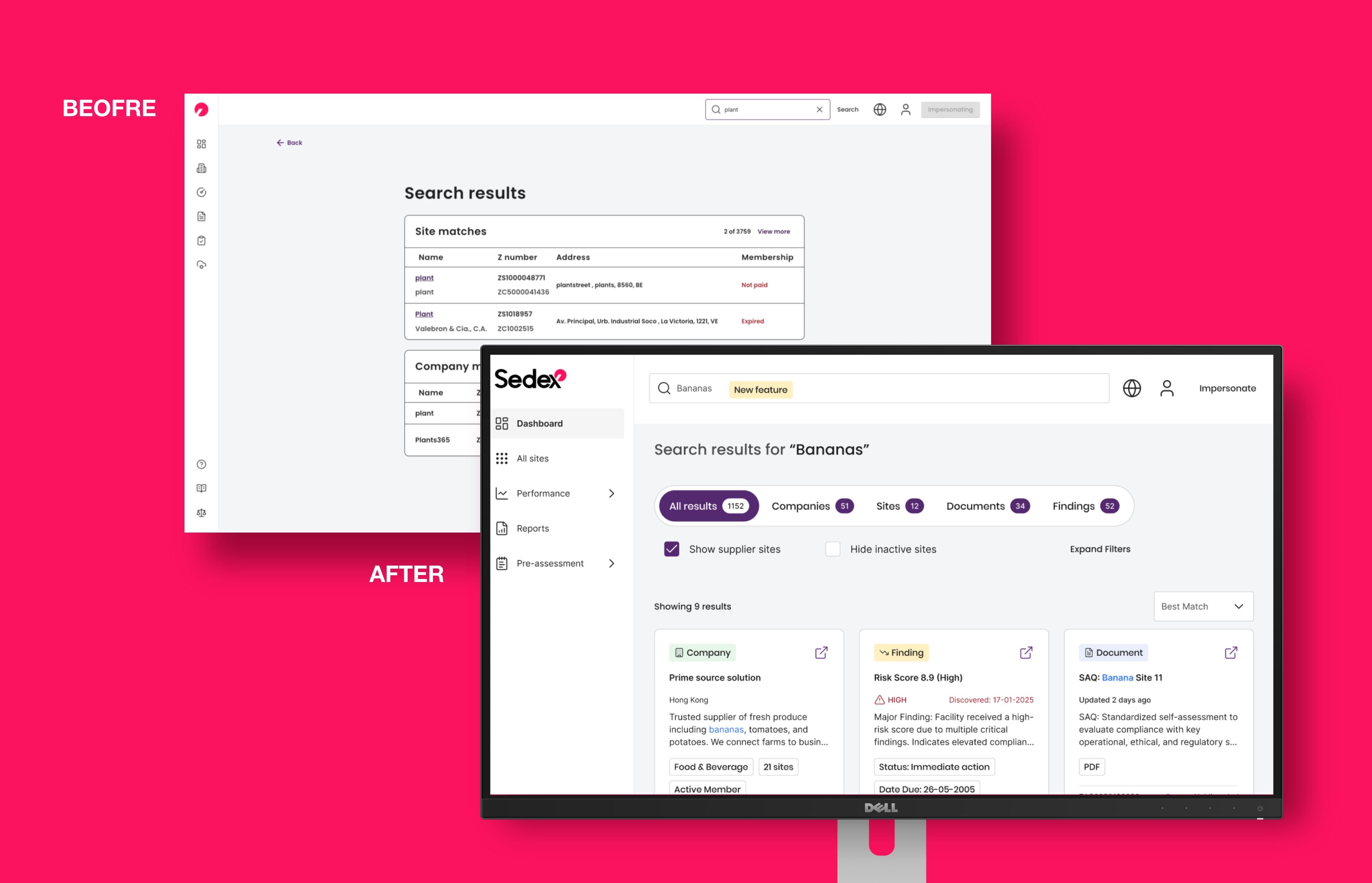
• Defined search experience principles, models and patterns to improve success.
• Aligned multiple Product, Data, Support and Engineering teams around a shared direction without formal ownership
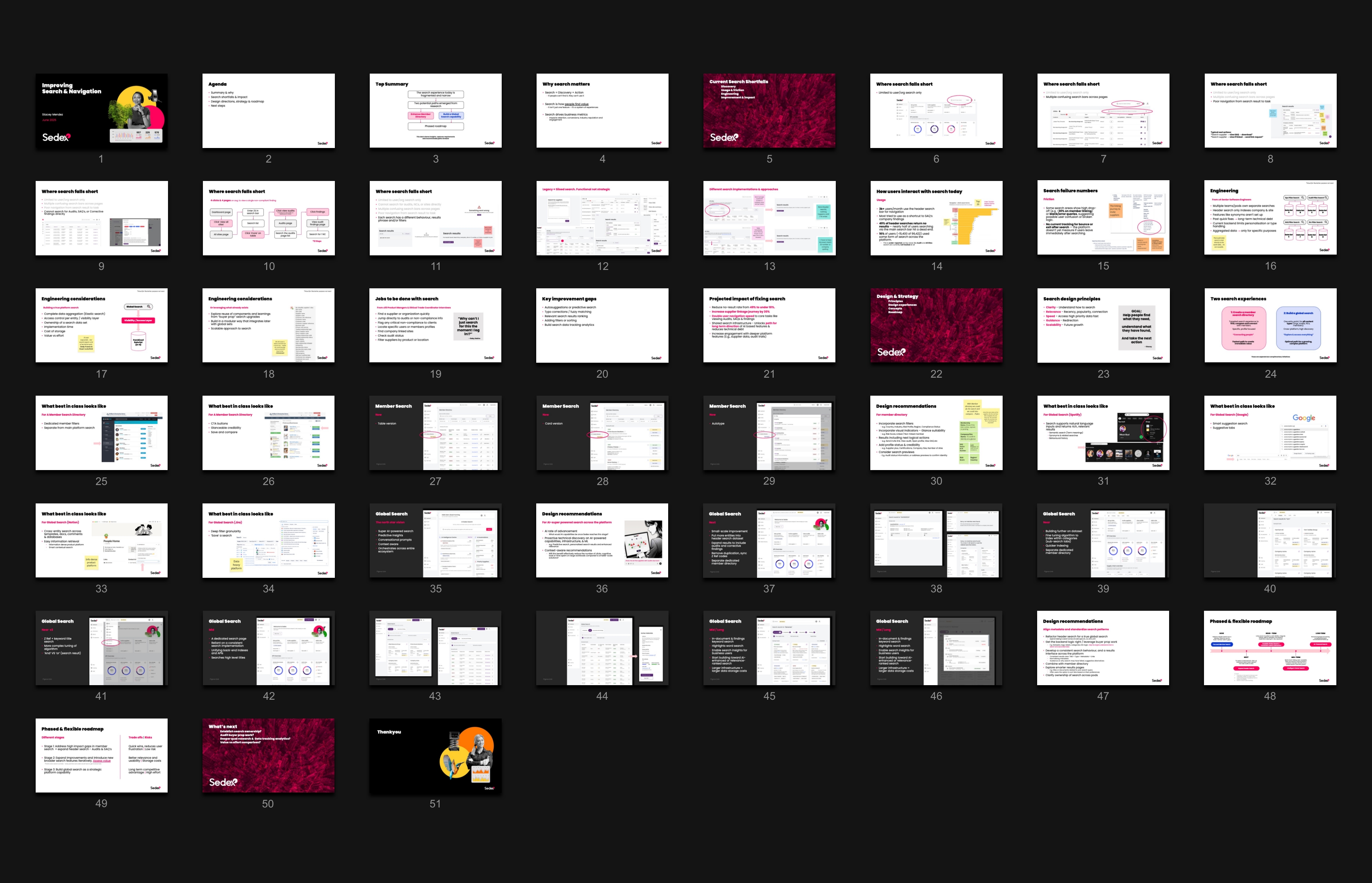
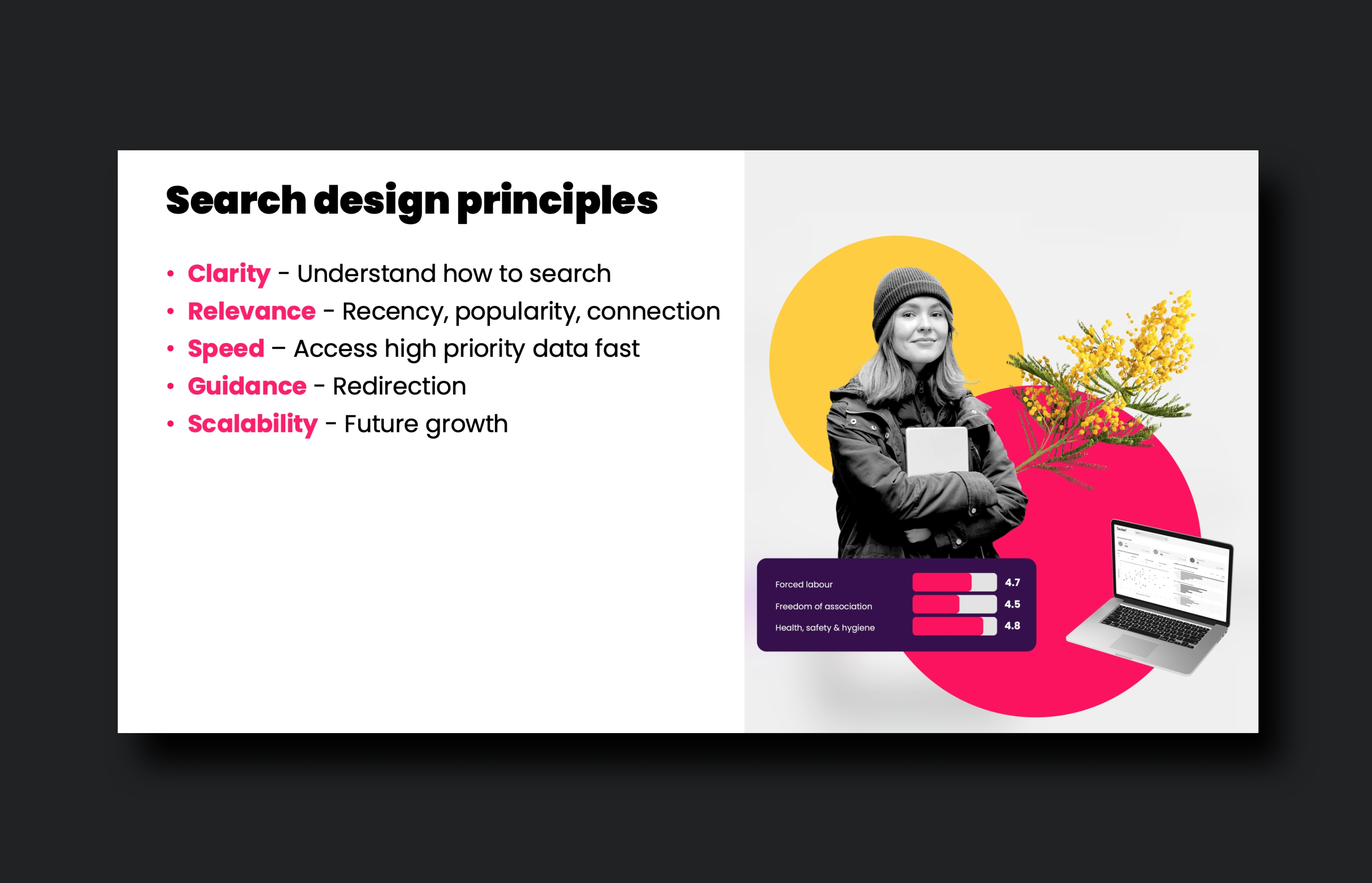
Here you are seeing the presentation commnicated across the company.
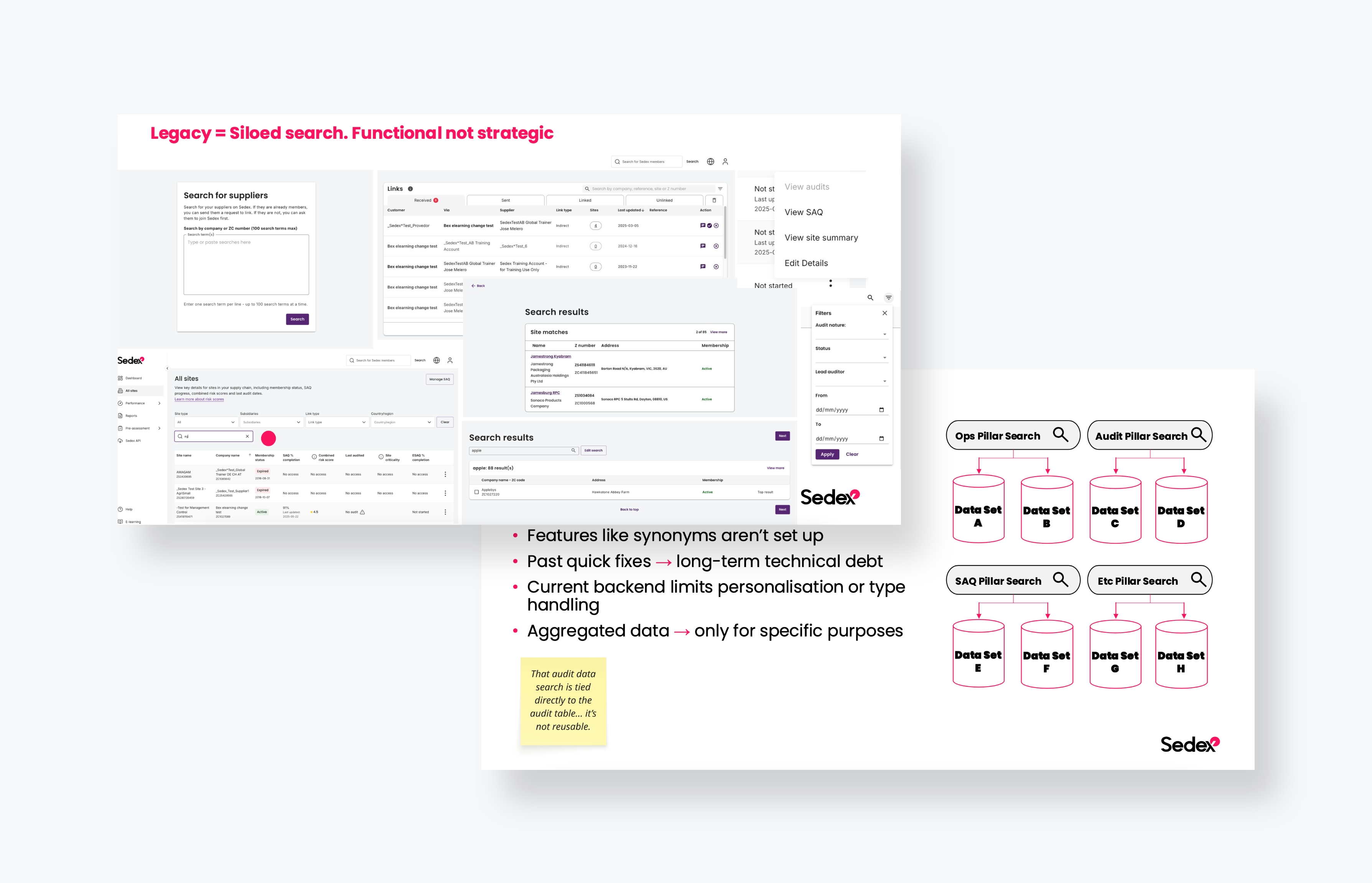
Doing an audit across the platform I found search had evolved in silos. Each team had implemented its own version, resulting in:
• Inconsistent user experiences (UX patterns, terminology & behaviours)
• Duplicated engineering effort
• Increasing complexity to maintain and extend search functionality
• Siloed data alignment across Product, Engineering, and Design domain pods (and Elasticsearch constraints)
• No shared ownership or long-term strategy
What was being asked for: "Just make search better."
What was actually needed: A platform capability roadmap + org wide alignment on approach.
This was not a UX problem. It was a strategic product decision about platform investment.
I led early-stage discovery to understand how search was being used across the platform, where it was breaking down, identify opportunities and constraints, and what a realistic path forward could look like. There was no single owner for search, so the work relied on influence and alignment across product, engineering, data, and support teams.
The goal was not to design a new search interface, but to make the problem clear and decision-ready.
I operated without formal ownership of all search surfaces, working through influence, facilitation, and shared alignment.
I led a structured discovery phase across four dimensions:
• Reviewed qualitative research and usage patterns across different search implementations
• Identified where users abandoned or reformulated searches
• Mapped user intent behind common search behaviours
• Interviewed PMs, engineers, support, Ethical Trade Coordinators, and operations teams
• Audited existing search solutions, constraints, and dependencies
• Uncovered duplicated work and conflicting priorities
• Partnered with engineering to understand indexing, performance, and scalability limits
• Assessed feasibility of shared infrastructure versus local optimisation
• Analysed how modern platforms were evolving search toward semantic and task-oriented discovery (Google, Notion AI, GitHub Copilot, Jira)
• Identified emerging expectations around AI-assisted search
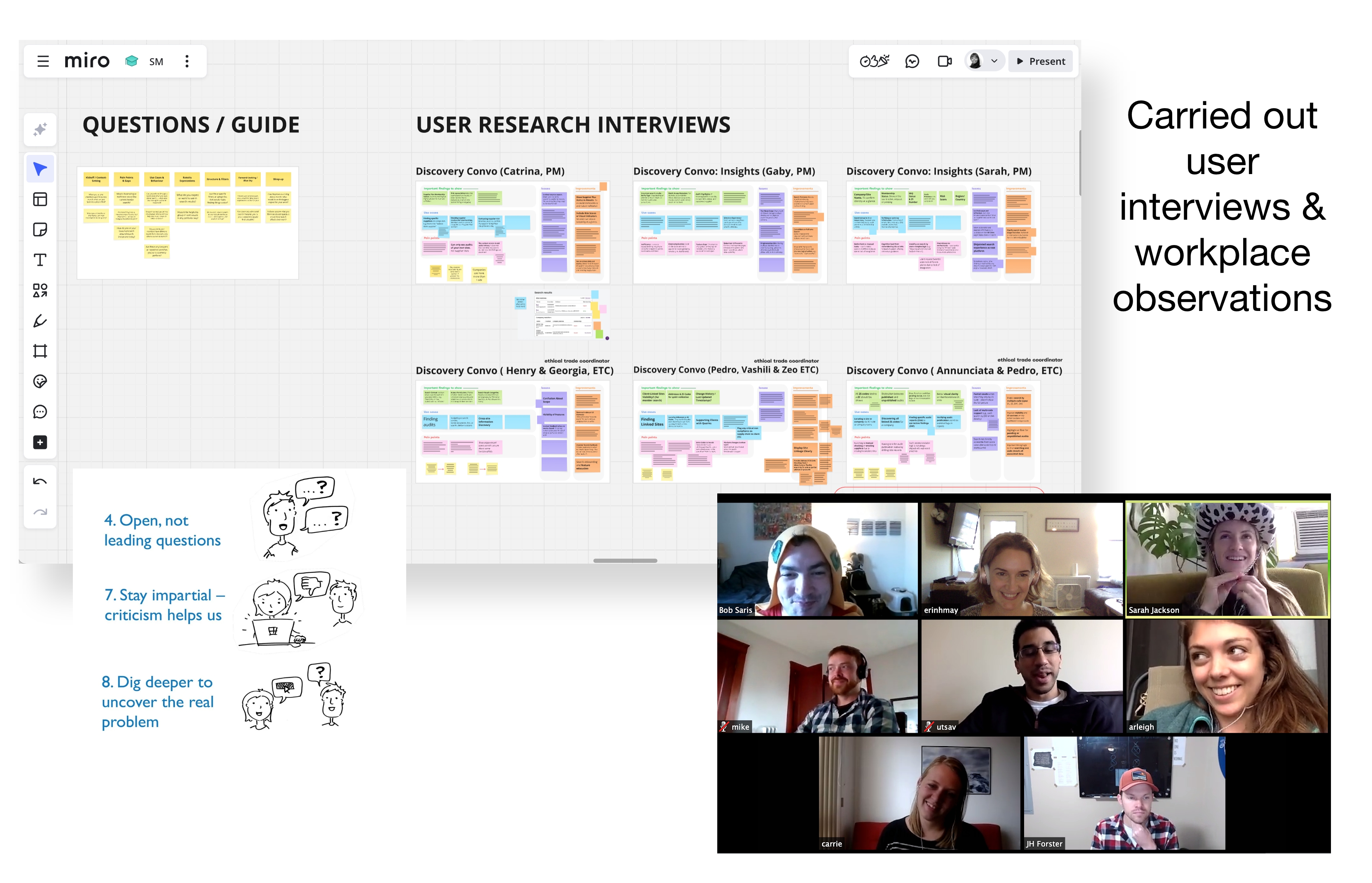
The most important insight was:
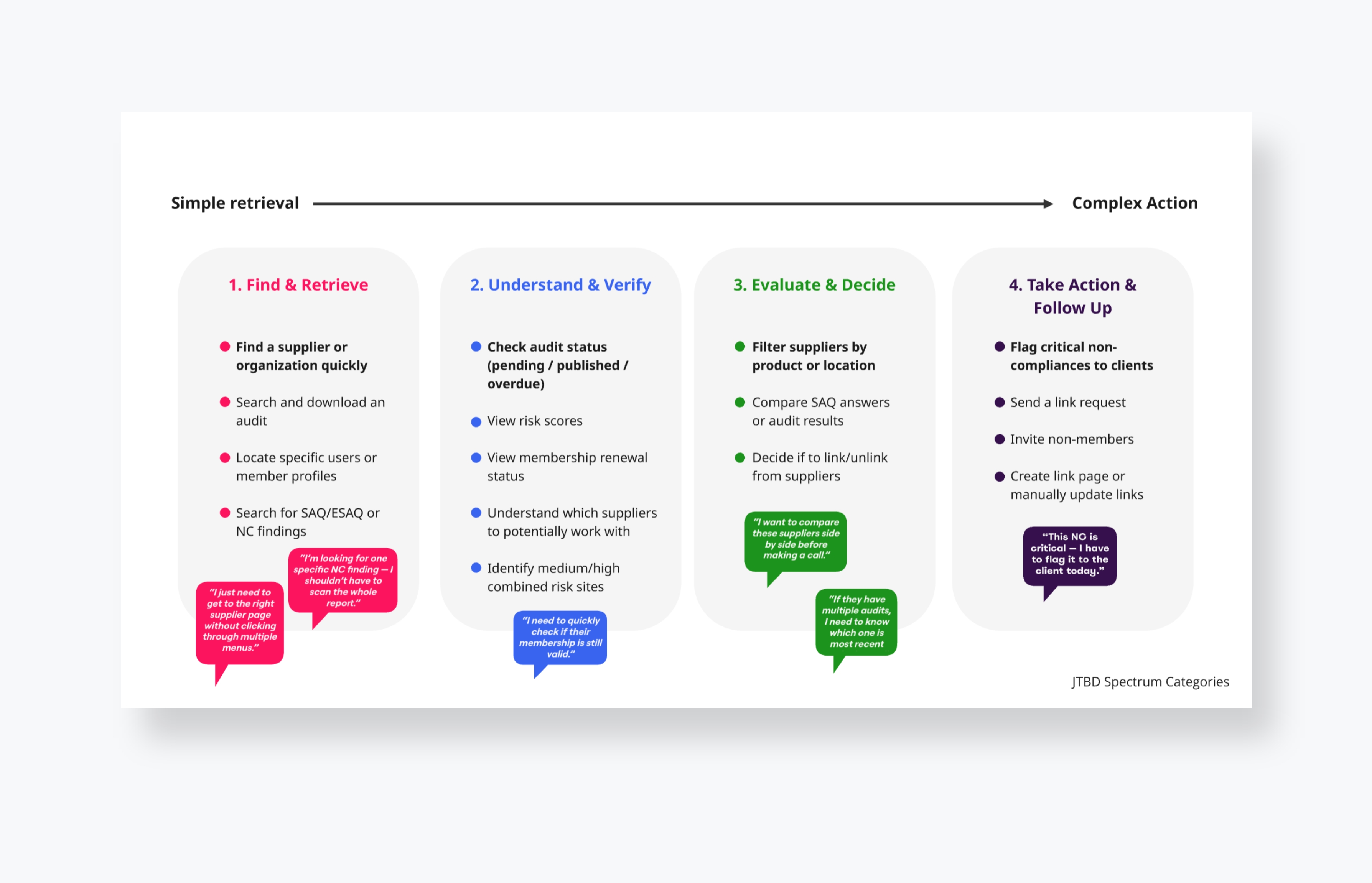
The platform users (Buyers, Suppliers and Customer Support Teams) were not searching for content — they were searching to complete tasks.
Search was being treated as a passive input/output function, but users expected it to be context-aware, proactive and integrated into workflows.
This reframed search from a feature into a core platform capability.
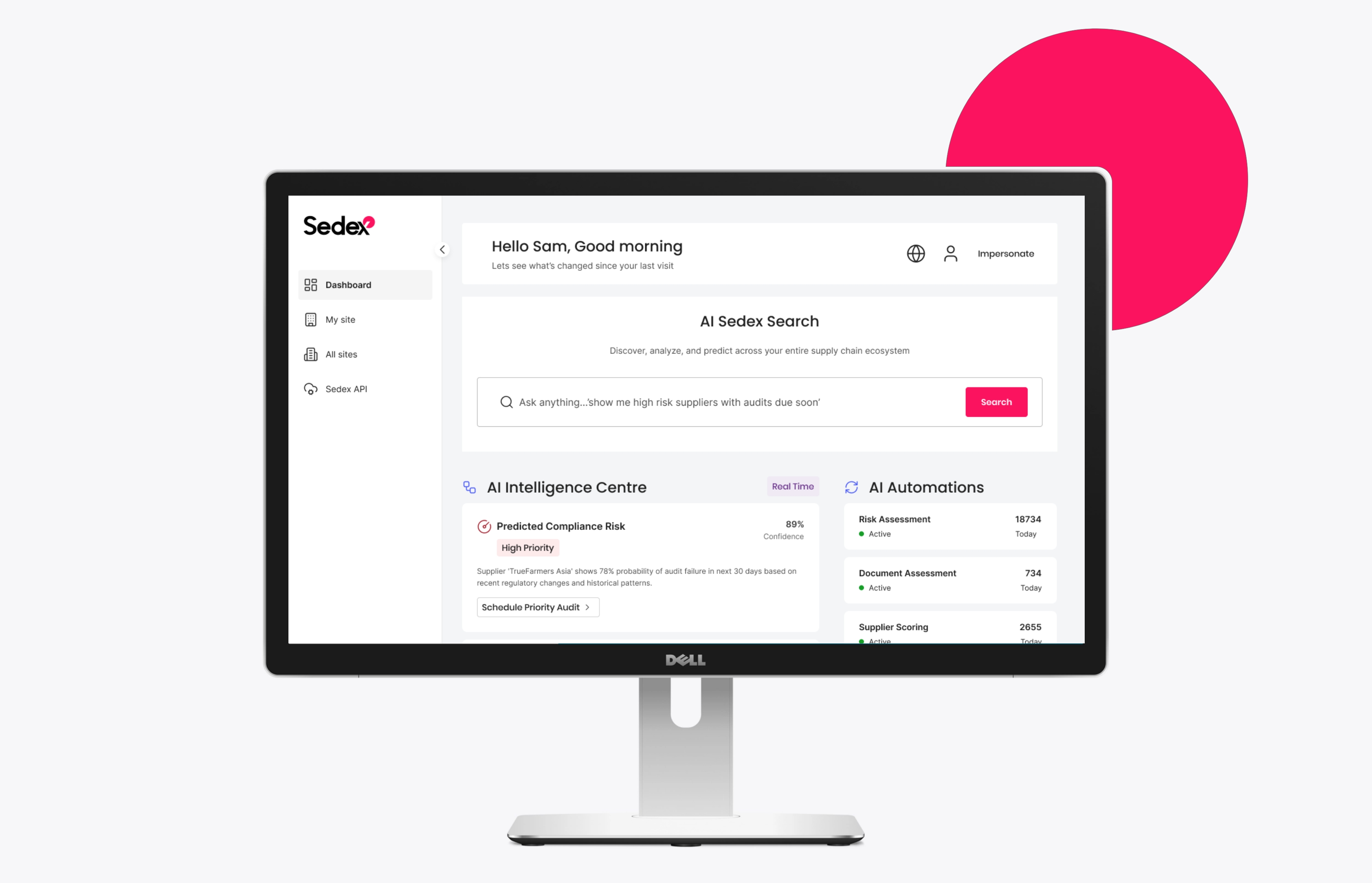
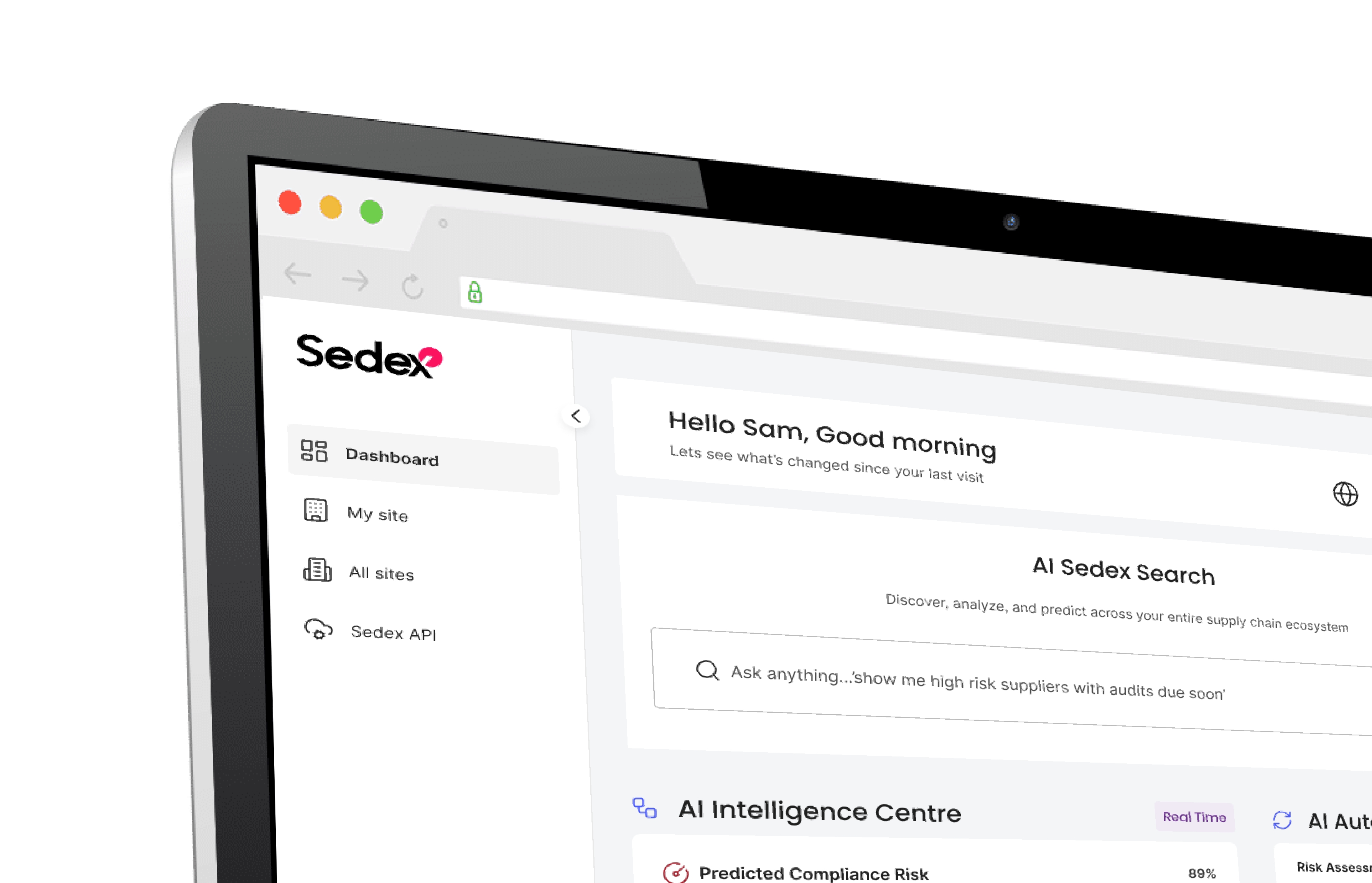
I defined a vision for search as a Search Intelligence Layer that would:
• Understand user intent and context
• Surface relevant actions, not just results
• Work consistently across all product domains
• Scale with future AI and semantic capabilities
The goal was not to immediately rebuild everything, but to establish a clear north star and phases that could guide incremental investment.
Several key trade-offs shaped the direction:
• Incremental unification vs full rebuild
→ Chose incremental unification to reduce risk (cost, tech debt & time) and allow teams to deliver value sooner.
• Local optimisation vs shared capability
→ Prioritised shared foundations to build towards overall goal, even if some teams initially lost autonomy.
• Advanced AI features vs data readiness
→ Deferred complex AI use cases until data quality and governance improved in additon to costs being allocated to increase platform data storage.
These decisions balanced long-term value with near-term feasibility.
We chose an incremental approach rather than a full rebuild to reduce risk and allow teams to keep delivering. Advanced capabilities were deliberately positioned as longer-term options, dependent on data quality and organisational readiness.
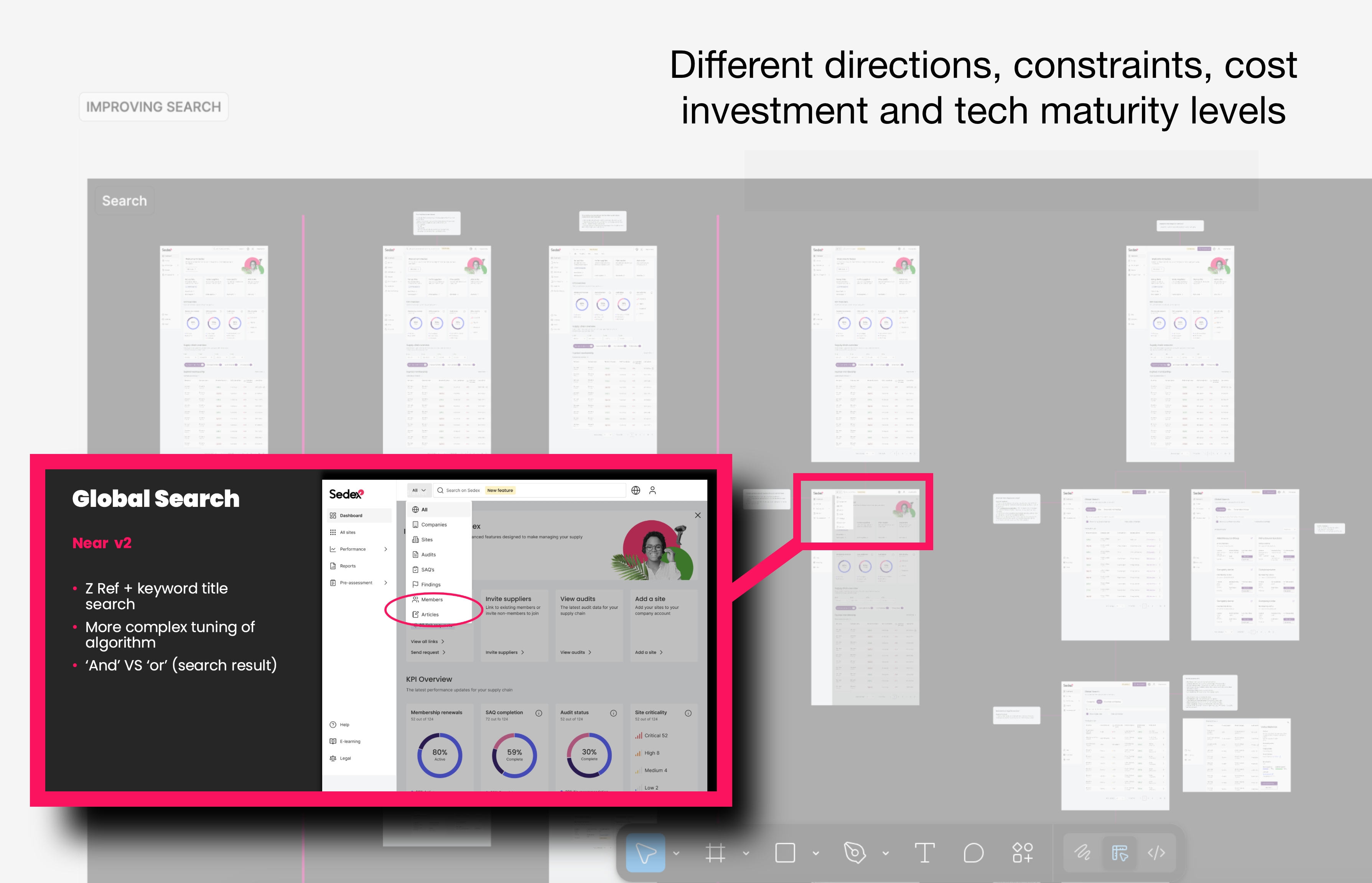
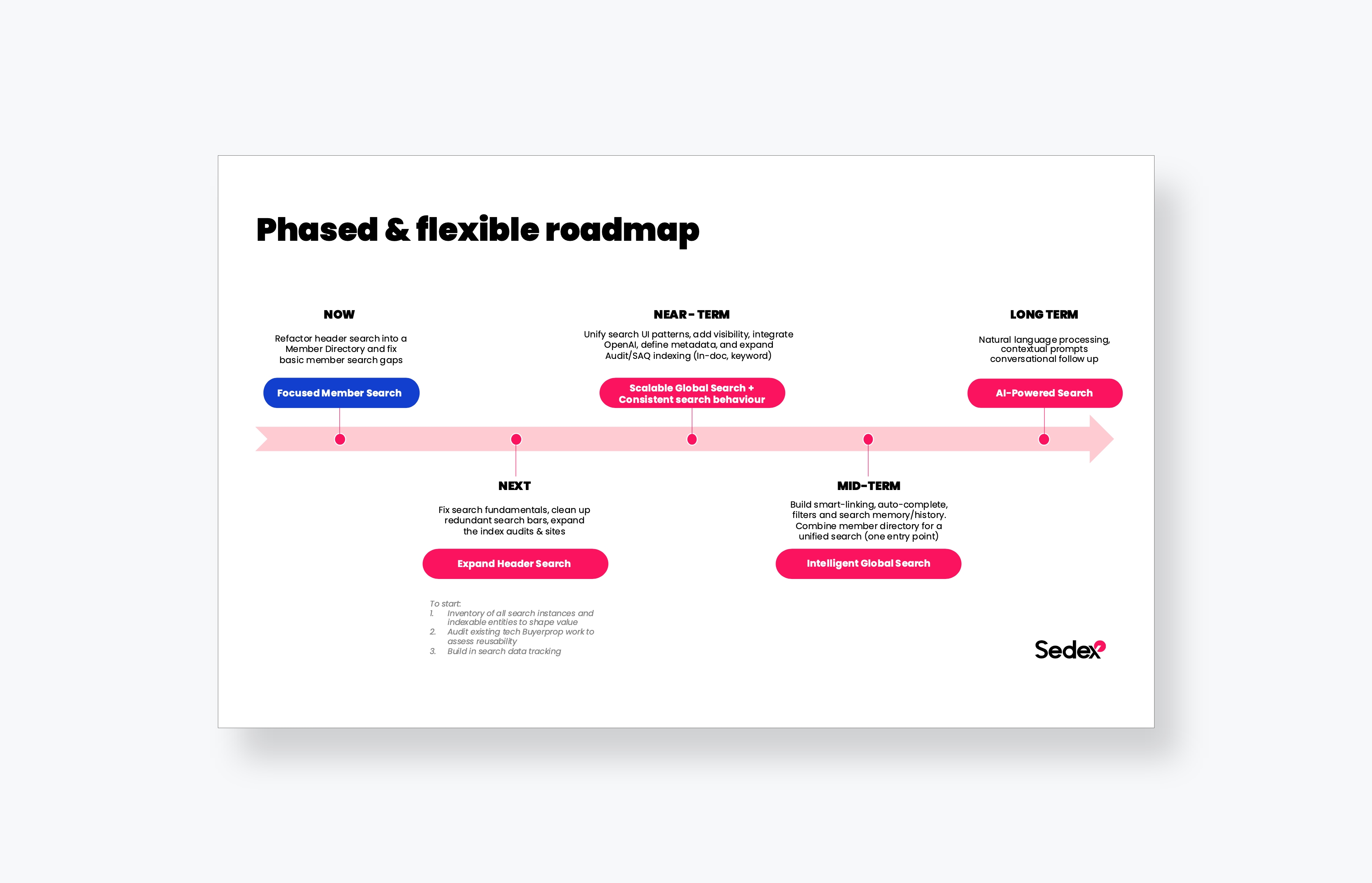
I worked with Product and Engineering to define a phased roadmap, from the current product to the end vision in 2–3 years.
Roadmap milestones were defined around learning and risk reduction, not just shipping. Early milestones focused on alignment and quick win improvements in the most visible problem areas. Mid-stage milestones introduced shared components and datasets once there was confidence they would not slow teams down. Later milestones remained flexible, allowing more advanced ideas to be explored only when the foundations were first in place.
Each milestone had a clear purpose: deliver some value, learn something important, or make the next decision easier.
conceptual platform visuals.The roadmap introduced a "Now-Next-Near-Future-Later" :
Phase 1: Establish shared principles and patterns. Address the highest-impact inconsistencies.
Phase 2: Introduce shared indexing and search components. Reduce duplicated logic across teams.
Phase 3: Layer in contextual and semantic search capabilities.
Phase 4: Enable proactive, task-oriented search experiences.
Search touched many teams but had no single owner, so progress depended on alignment rather than authority. I brought product, engineering, data, and support together to agree on the core problems search needed to solve and the constraints we were working within.
By creating shared principles and documenting decisions, teams could move forward consistently without waiting for central approval. This reduced fragmentation and helped leadership make confident decisions about where to invest.
After the direction was agreed, teams did not pause delivery or rebuild search from scratch. Instead, the strategy was used to guide ongoing work.
Teams began aligning new search changes to the shared direction, which reduced duplication and conflicting approaches. Some quick improvements were made where the problems were most obvious (member search, Consistant search bar behaviour), while engineering explored shared foundations that could be adopted gradually.
Most importantly, search stopped being treated as an ad-hoc feature and became a recognised platform capability. This made it easier for teams and leaders to decide where to invest and where not to.
Success here wasn’t about shipping a new search UI/UX. It was about making search easier to build, easier to improve, and more useful for users.
We measured this through ways to reduce duplicated effort, faster time (less clicks) for users to find what they needed, and clearer ownership and decision-making around search. These measures made it possible to judge whether continued investment was worthwhile.
This work created clarity where there was ambiguity, enabled seperate teams to identify a way to move forward together with confidence, and laid the groundwork for future innovation without forcing a risky, all-at-once rebuild.
• This work reinforced how easily platform capabilities fragment when ownership is unclear. Without a shared strategy, teams optimise locally and create long-term complexity, even with good intentions.
• Secondly, it also showed the importance of framing problems in terms of user intent rather than features. Reframing search around tasks, not results, unlocked a clearer direction and better alignment across teams.
• Finally, it highlighted that in cross-cutting initiatives, progress depends less on having the “right” solution and more on creating clarity, trust, and decision-ready options that allow the organisation to move forward.


