Creating something that didn't exist before: a connected music experience for shared listening, from concept to commercial launch.
Building design, and bringing a new product to life at ROXI from scratch, taught me that the hardest part of leading design isn't the craft. It's holding a clear direction when everything around you is moving. Investor pressure, missed launch dates, personality clashes, manufacturers in Asia who don't speak English, and a funding runway that shrinks faster than the roadmap.
We built it anyway. 100,000+ units. £13 million in investment. Celebrity partnerships, and a product that got into people's homes.
Outcomes
• 100,000 units sold through Argos, Amazon and Selfridges
• £13 million raised in investment across years one and two
• £50 million stock-listed valuation after launch
• Distribution partnership with Sky
• Music partnerships: Robbie Williams, Sheryl Crow, Alesha Dixon
What I did
• Defined the product vision and design language from scratch across hardware, software, brand and packaging, with no category precedent to follow
• Built and led a team of two other designers
• Led design across: user research, market trend analysis, brand positioning, product experience and design principles
• Worked closely with senior leaders in Marketing, Engineering, Manufacturing, Operations and Sales
• Influenced the future product portfolio roadmap, which helped secure investor confidence and increase the company's value


01 — Challenge
There was no playbook.
I helped define what design needed to be.
ROXI was an ambitious new product combining hardware, software, TV, music and voice technology. The challenge wasn't simply designing the experience. We were creating a new product category while the proposition, technology, business and team were all evolving at the same time.
I worked across product, brand, strategy and leadership. I helped connect the customer experience to the commercial proposition, and made decisions as the technology, manufacturing and business evolved, working closely with the founders, investors, engineers, manufacturers and external partners.
02 — My role
From idea to product
Overtime my role spanned across the whole product journey and ecosystem:
• Product - Hardware, TV experience and connected devices. I helped shape the product proposition and experience across the physical and digital ecosystem, so the different components worked together as one product.
• Strategy - Product proposition, future opportunities and roadmap. I helped explore where ROXI could go next and created enough clarity for the team to decide what mattered now and what could wait.
• Brand - Positioning, identity, packaging and marketing. The product needed to communicate a new proposition clearly, both in the experience itself and in how it appeared in the world.
• People - Hiring, team development and external partners. As the product developed, so did the design capability around it. I later rebuilt and developed the team and brought in external expertise at different stages.
• Leadership - Founder collaboration, investor presentations and cross-functional decision making. Design wasn't an isolated function. I worked with senior stakeholders to bring design thinking into wider business and product decisions.
In short, my role was to help establish a clear product direction while building the design capability needed to make it real.

03 — Finding the direction
We needed a product people wanted to live with, not another piece of technology.
Research, market analysis and positioning work helped us understand the emotional opportunity around music, and how ROXI could differentiate itself from traditional consumer electronics. The experience needed to feel:
The experience needed to feel:
• Fun: Music should invite participation.
• Iconic: The product needed a distinctive presence in the home.
• Stylish: Technology shouldn't dominate the environment.
• Effortless: Access to music should require almost no learning.
These principles gave the team a shared language for making decisions across hardware, software, brand and service.

04 — Designing the whole experience
The proposition only worked if every part of the experience worked together.
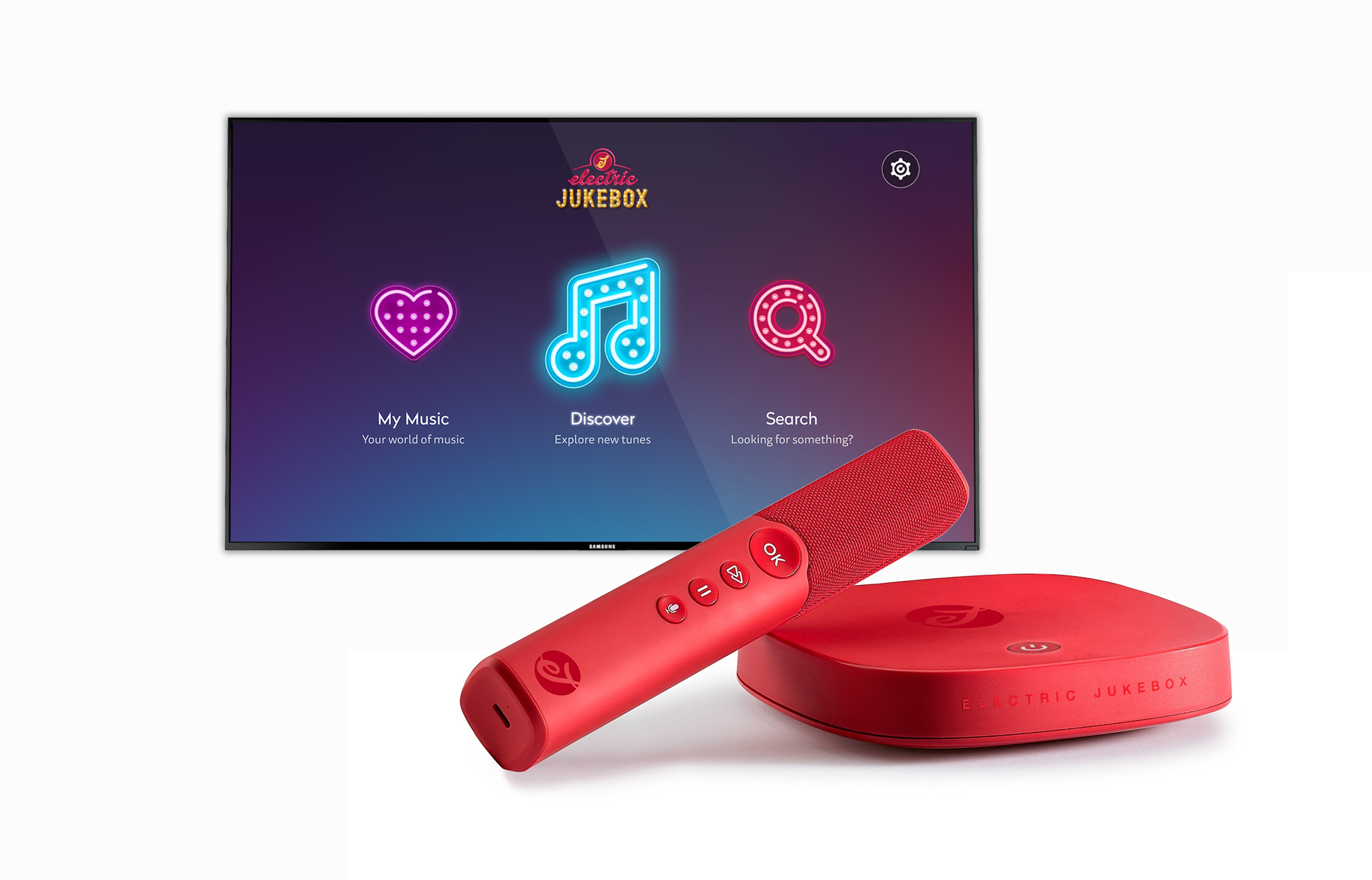
The proposition of a 70-million-song catalogue created a deceptively difficult design challenge. How do you make an enormous amount of content feel simple?
• Physical
The proposition of a 70-million-song catalogue created a deceptively difficult design challenge. How do you make an enormous amount of content feel simple?
Digital
The TV experience needed to make a huge music catalogue feel immediate and easy to navigate.
Brand
ROXI needed to feel like entertainment rather than another piece of consumer electronics.
Service
Setup, activation, content and ongoing use needed to feel like one connected experience.
My industrial design background became particularly valuable here. Hardware, software, brand and service weren't separate design projects. They were different expressions of one product promise.


05 — Building the design function
The product needed a team, not just a designer.
As the company moved towards launch, I built a small tight-knit team, hiring two designers to help across product and experience. I also coordinated external design, manufacturing and development partners, including teams in China, alongside our experienced Manufacturing Director.
I established:
• Cross-functional ways of working & design reviews/critiques
• Product and brand principles
• Relationships with external design and manufacturing partners
My role gradually shifted from producing the work to creating the conditions for other people to produce good work. That was an important transition in my own leadership development.
06 — Leading through 0→1
In a startup, the plan changes constantly. The direction can't.
ROXI faced the pressures you'd expect from a hardware startup:
• Launch dates moved.
• Technical constraints emerged.
• Manufacturing introduced compromises.
• Investment created pressure.
• Commercial priorities changed.
There wasn't always a perfect answer. My role was to help us as a team distinguish between what was essential to the product proposition and what could change without losing it.
The design principles & brand guidelines gave the wider team a way to make those decisions without every decision coming back to me. That was how design began to scale beyond my own involvement.

07 — Shaping what came next
The ambition was bigger than the first product.
As the first product developed, I worked with the founders to explore what ROXI could become beyond the initial set-top box, including:
• Future connected products
• Extensions to the music experience
• Product portfolio opportunities
• The longer-term ecosystem
The goal was to establish ROXI not simply as one piece of hardware, but as the beginning of a broader entertainment platform. This thinking also helped articulate the company's future potential to investors and partners.
08 — Bringing the product to market
From concept to something people could actually buy.
As a tight-knit design team we worked across the final hardware, TV experience, packaging, retail and marketing to bring the proposition into the real world. ROXI launched through major retail and online channels, including Argos, Amazon and Selfridges, alongside partnerships and endorsements with artists including Robbie Williams, Sheryl Crow and Alesha Dixon. The idea had become a real consumer product.
09 — The outcome
We turned an idea into a real business.
The commercial numbers were only part of the outcome. I had also helped establish:
A design function: from a single founding designer to an internal team
A shared product vision: across hardware, software, brand and service
A design language: one that let internal and external teams work towards the same experience


Design became part of how the company made decisions.
When I joined, there was an idea and an ambition. By launch, there was:
• A product
• A design team
• A shared product vision
• A brand, design language and experience principles
• A roadmap for what could come next
Design had also become part of conversations about product, business, investment, manufacturing and growth. That's the part of the ROXI story I value most. I didn't just design the product. With others, I helped build the design vision, capability and direction around it.
0→1 leadership is about creating enough clarity to keep moving.
• Direction matters more than certainty. You rarely have enough information to know the perfect answer. You need enough clarity to make the next good decision.
• Design leadership scales through others. The goal isn't to remain the person with all the answers. It's to create principles, context and confidence so other people can make good decisions too.
• Protect the proposition, not the solution. Startups change constantly. Strong design leadership means knowing which parts of the vision are essential and which can evolve.


